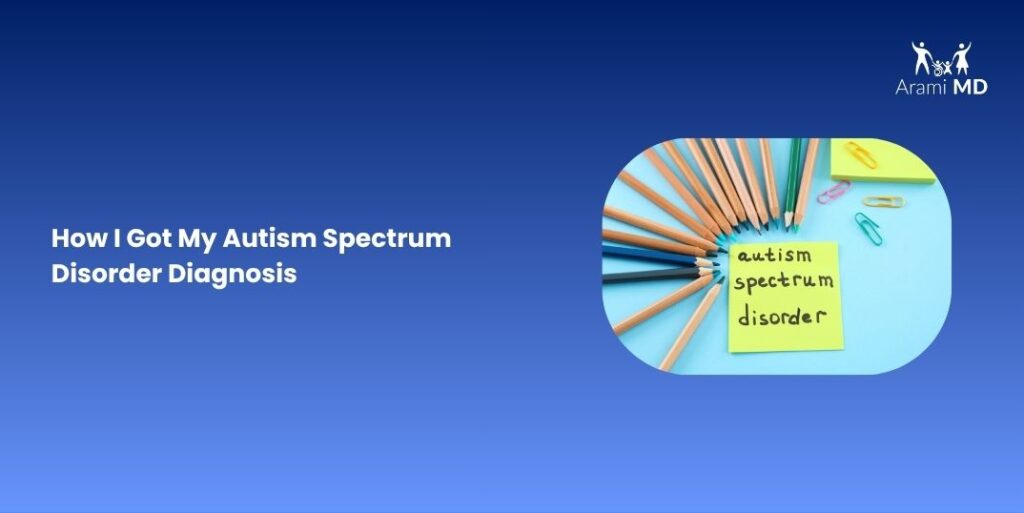
I was 27 years old when I finally got the words. Autism spectrum disorder. And honestly? My first reaction wasn't a shock. It was a relief.
But let me back up because getting to that diagnosis wasn't a straight road. It was years of wondering why certain things felt so much harder for me than they seemed to be for everyone else.
And if you're reading this because you're somewhere in that same in-between place, whether you're a parent watching your child struggle or an adult quietly connecting dots about yourself, I want to walk you through exactly what the process looked like and what I wish I had known earlier.
Autism spectrum disorder or ASD is a neurodevelopmental condition that affects how a person communicates, processes social cues, and interacts with the world around them.
The word "spectrum" is there for a reason. It looks completely different from one person to the next. Some people need significant daily support. Others go through most of their lives without ever receiving a formal diagnosis.
According to the CDC's Autism and Developmental Disabilities Monitoring Network, about 1 in 31 children aged 8 years in the United States has been identified with autism spectrum disorder.
For me, it was a pattern of things that individually seemed explainable but together started to form a picture. Sensory overwhelm in crowded places. Difficulty reading unspoken social rules that everyone else seemed to just know instinctively.
A tendency to hyperfocus on specific interests for hours without noticing time passing. Masking exhaustion after social situations that other people seemed to find energizing.
The tricky part is that not every child with autism spectrum disorder shows all of these signs.
And some children show signs that could point to several different things which is part of why diagnosing autism spectrum disorders takes the kind of careful, structured evaluation it does.
When parents bring concerns about their child to a pediatrician, the first step is usually a developmental screening.
If the screening raises concerns, the next step is a full developmental evaluation by a specialist which can include:
The gold standard evaluation tools used today include:
This is one of the most common frustrations I hear from parents. You raise a concern and then wait. And wait. Only about 50% of autistic children are identified by preschool age, even though earlier diagnosis leads to significantly better outcomes.
Part of the problem is access. Waitlists for developmental evaluations can stretch six months to over a year in many areas.
A diagnosis opens doors that were previously closed. It can be tackled through various means:
It doesn't change who you are. It just explains some of why you are the way you are and that alone can be genuinely transformative.
If you're in the process of pursuing a diagnosis for your child or yourself, trust your instincts. The fact that you're asking the question is already meaningful. Push for the evaluation, document what you're observing, and don't let long wait times become a reason to stop advocating.
The exact cause of autism spectrum disorder is not fully understood, but research points to a combination of genetic and environmental factors.
The cost of an autism evaluation varies widely depending on location, provider and whether you have insurance. In the United States, a comprehensive evaluation can range from $1,000 to $5,000 if paid out of pocket.
Since the DSM-5 was updated in 2013, autism is no longer divided into separate subtypes like Asperger's syndrome or PDD-NOS. All of these fall under the single umbrella diagnosis of autism spectrum disorder.
Autism in girls is frequently missed or diagnosed much later than in boys, largely because girls tend to mask more effectively. Masking means camouflaging autistic traits by mimicking social behavior they observe in peers.
Autism can be reliably diagnosed as early as age two. However, many children are not diagnosed until they start school, and some not until adulthood.
Yes. Many adults, particularly women, go undiagnosed for years. Adult diagnosis is possible through a clinical evaluation with a psychologist or psychiatrist experienced in autism.
Start by speaking with your pediatrician. You can also request a developmental screening at your next visit and ask for a referral to a developmental specialist.