For two years, I woke up tired every single morning. My husband said I snored loud enough to wake the neighbors, and a few times I gasped for air without even remembering it. That is when I started searching for sleep apnoea tips and how to fix sleep apnoea, and what I found genuinely changed my life.
This is not a clinical guide. It is what actually worked for me, checked against what my doctor and a few trusted health sources told me along the way.
OSA happens when the muscles in your throat relax too much during sleep. Your airway narrows or closes for a few seconds at a time, and your brain wakes you up just enough to restart your breathing, often without you noticing.
I did not know any of this at first. I only knew I was always exhausted. I started a simple two-week sleep journal, jotting down how many times I woke up and how groggy I felt each morning. That journal is what finally pushed me to ask my doctor for a sleep study, instead of just buying another bag of coffee.
Untreated sleep apnea raises the risk of high blood pressure and heart problems. The CDC notes that sleep apnea is more common among Black, Hispanic, and Native American adults than white adults, and it is closely tied to heart health. A 2025 estimate published in Respiratory Medicine suggests close to a third of US adults may have some degree of OSA, which is a much bigger number than most people expect.
That was enough to scare me into action. I did not want to wait around for something worse to happen.
My sleep study confirmed mild to moderate OSA. My doctor gave me a list of options, but here is what actually worked day to day, not just what sounded good on paper.
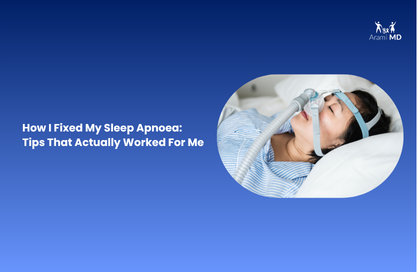
My first week with the machine was rough. The mask felt strange and I pulled it off in my sleep more than once. By week three, I was sleeping through the night and waking up without that heavy, foggy feeling.
I used to sleep flat on my back, which makes the airway more likely to collapse. A simple wedge pillow kept me from rolling over, and it helped more than I expected.
I did not crash diet. I cut late-night snacking and added short walks. Losing even a small amount of weight eased pressure on my airway.
Alcohol relaxes the throat muscles even more, which makes apnea worse. Skipping my evening glass of wine made a noticeable difference within days.
On nights I traveled without my CPAP, a dentist-fitted mouth guard kept my jaw forward and reduced snoring.
Adjusting to treatment takes time, and that is normal. I kept my bedroom cool, used the same bedtime every night, and gave myself permission to nap on bad days instead of pushing through exhausted.
What Helped |
What Didn't |
| Side sleeping with a wedge pillow | Sleeping on my back |
| Cutting alcohol after 7 PM | Relying on caffeine to push through fatigue |
| Slow, steady weight loss | Crash dieting |
| Consistent CPAP use, even on weekends | Skipping the mask on "easy" nights |
A global review estimated that nearly one billion adults aged 30 to 69 have some form of OSA worldwide, with numbers climbing alongside rising obesity rates. That is not meant to scare you. It is meant to show you are far from alone in this.
Fixing my sleep apnea did not happen overnight, and it was not just one single trick. It was a handful of small, steady changes that added up.
If you are a parent reading this and wondering about your own child's loud snoring or restless nights, sleep problems are not only an adult issue. Arami MD's pediatric team evaluates sleep issues in children alongside related concerns like ADHD and anxiety. Book a consultation with Arami MD to get your child's sleep checked out, or browse our blog for more family health tips.
Mild cases sometimes improve with weight loss or better sleep position, but most people need ongoing treatment like CPAP or a dental device.
Many people notice better energy within two to three weeks of consistent use, though full adjustment can take a couple of months.
For some people, especially after significant weight loss or surgery, symptoms can resolve. For most, it is managed rather than cured.
Yes. Untreated OSA raises the risk of high blood pressure, heart disease, and daytime accidents from fatigue.