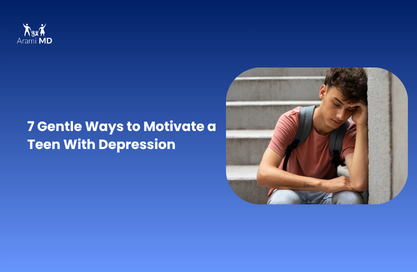
How to motivate a teenager with depression is a question many parents quietly struggle with, especially when their once-active, engaged child suddenly seems withdrawn, unmotivated, or disconnected from things they used to enjoy.
As a parent, it's natural to want to help, but sometimes you wonder:
These are common questions, and they're important ones. Depression can affect the way a teenager thinks, feels, and functions. The goal isn't to pressure your teen into "snapping out of it." Instead, it's about creating an environment where they feel supported, understood, and capable of taking small steps forward.
In this guide, you will find practical strategies that can help you encourage your teen while also recognizing when professional support may be needed.
Depression is more than just feeling sad. It can change the way the brain processes energy, concentration, decision-making, and emotions.
A teenager with depression finds it difficult to :
Understanding this can help parents shift from frustration to empathy. Motivation often returns gradually as depression is recognized and appropriately supported.
Every teenager experiences ups and downs, but ongoing changes that last for two weeks or more may deserve attention.
Common signs include:
These signs don't automatically mean your teen has depression, but they are worth discussing with a healthcare professional.
When teens feel overwhelmed, they often need understanding before they need advice.
Instead of starting with:
"You need to get back to school."
Try:
"I've noticed things seem really hard lately. I'm here to listen whenever you're ready."
Feeling heard can reduce the pressure many teens experience and make them more open to conversations about next steps.
Sometimes, sitting quietly together, going for a drive, or taking a walk can create opportunities for meaningful conversations without making them feel interrogated.
Depression can make even simple tasks feel overwhelming.
Instead of expecting your teen to tackle an entire to-do list, focus on one manageable step at a time.
Examples include:
Small accomplishments can help rebuild confidence and create momentum over time.
Celebrate progress, even if it seems minor.
Parents naturally worry about their child's future. However, repeated reminders, criticism, or lectures may unintentionally increase feelings of guilt or shame.
Instead of saying:
"You never do anything anymore."
Try:
"I know things feel difficult right now. Let's figure out one thing we can do together today."
Compassion doesn't mean lowering expectations—it means adjusting your approach to match what your teen is capable of in that moment.
Depression often causes teens to lose interest in hobbies, sports, music, or spending time with friends.
Rather than insisting they jump back into everything at once, encourage gentle re-engagement.
For example:
Even brief moments of enjoyment can help interrupt the cycle of isolation.
Structure can be comforting when life feels overwhelming.
Simple routines help reduce decision fatigue and provide a sense of stability.
A daily routine might include:
The goal isn't perfection—it's creating gentle consistency.
Many teens with depression feel like they're constantly falling short.
Acknowledging effort rather than results can make a meaningful difference.
Instead of focusing only on grades or achievements, notice things like:
Comments such as:
"I know that wasn't easy, and I'm proud of you for trying."
can help reinforce resilience and encourage future progress.
While family support is incredibly valuable, depression often requires professional evaluation and treatment.
If your teen's symptoms are interfering with school, relationships, or everyday life—or if they seem to be getting worse—it may be time to seek help.
A comprehensive evaluation can help identify whether depression, anxiety, ADHD, learning differences, or other developmental or emotional concerns are contributing to what your teen is experiencing.
Early support can make a significant difference and help your family better understand the next steps
If your teen talks about wanting to die, expresses suicidal thoughts, or appears to be in immediate danger of harming themselves or others, treat it as an emergency. Stay with them, remove access to anything they could use to harm themselves if it is safe to do so, and seek immediate help by contacting your local emergency services or taking them to the nearest emergency department.
Even with the best intentions, some responses can make it harder for a teen to open up.
Try to avoid:
Instead, focus on listening, validating their emotions, and encouraging gradual progress.
Creating a supportive home environment doesn't mean solving every problem.
It means helping your teen feel safe enough to keep trying.
Simple ways to support them include:
Consistency, patience, and empathy often have a lasting impact.
Sometimes depression doesn't occur on its own.
Conditions such as ADHD, anxiety, autism spectrum disorder, or learning differences can affect mood, motivation, and emotional well-being.
If your teen has ongoing difficulties with attention, emotional regulation, school performance, or social interactions in addition to symptoms of depression, a comprehensive developmental evaluation may help provide a clearer picture.
Understanding the underlying factors can lead to more personalized support and practical strategies for both home and school.
Every teenager's experience with depression is unique. What helps one teen may not be the right approach for another.
A developmental-behavioral pediatrician can look beyond the symptoms to better understand how emotional, behavioral, developmental, or learning challenges may be affecting your teen's daily life.
At Arami MD, Dr. Neda Arami has spent more than 30 years helping children, adolescents, and families navigate challenges related to ADHD, autism, anxiety, learning differences, emotional health, and behavior. Her family-centered approach focuses on thoughtful evaluations, practical recommendations, and helping parents feel more confident in supporting their child's growth.
If you're concerned about your teenager's emotional well-being, learning more about your options or reaching out for an evaluation can be an important first step.
Helping a teenager with depression isn't about finding the perfect words or fixing everything overnight. It's about showing up consistently with patience, understanding, and realistic expectations.
Small moments of connection, celebrating effort, creating predictable routines, and encouraging manageable steps can help your teen feel supported as they work through difficult emotions.
If you're noticing ongoing changes in your teenager's mood, motivation, or daily functioning, remember that you don't have to navigate it alone. Seeking guidance from an experienced developmental-behavioral pediatrician can provide valuable insight into what your teen is experiencing and help your family move forward with confidence.
Focus on encouragement rather than pressure. Small, achievable goals, consistent routines, emotional support, and recognizing effort can help rebuild motivation over time. Professional support may also be beneficial when symptoms persist.
Yes. Depression commonly affects motivation, concentration, energy, and decision-making. What appears to be laziness is often part of the condition rather than a choice.
Gentle encouragement is generally more effective than forcing participation. Start with low-pressure activities your teen previously enjoyed and respect their emotional limits while continuing to offer support.
If symptoms last longer than two weeks, interfere with school, relationships, daily functioning, or include hopelessness or talk of self-harm, it's important to seek professional evaluation promptly.
Some symptoms can overlap. Difficulties with attention, emotional regulation, social interactions, or executive functioning may contribute to low mood or reduced motivation. A comprehensive evaluation can help clarify what's going on.