If you are looking into sleep apnea treatment options, you have more choices now than you did a few years ago. That is good news. It also makes the decision harder.
The first thing to know is simple. There is no single best treatment for everyone. What works best depends on why your airway closes, how severe your sleep apnea is, whether you have obesity, how well you tolerate devices, and what your sleep study shows.
According to the American Academy of Pediatrics, obstructive sleep apnea affects about 1% to 5% of children. That may sound like a small number, but it means many families deal with this problem without knowing what is causing it.
The good news is that care has improved. Today, doctors have several sleep apnea treatment options, and the right choice depends on the person’s age, symptoms, airway, weight, sleep study results, and overall health.
For many people, continuous positive airway pressure (CPAP) still works best. It has the strongest track record and remains the standard treatment for moderate to severe obstructive sleep apnea. But it is not the only path. Today, treating sleep apnea can also include custom oral appliances, weight loss medication for selected patients, positional therapy, nerve stimulation, and surgery.
This article focuses on obstructive sleep apnea, which is the most common form.
Sleep apnea is a condition where breathing stops, slows down, or becomes blocked during sleep. The most common type is obstructive sleep apnea. This happens when the airway becomes partly or fully blocked.
In children, sleep apnea does not always look like daytime sleepiness. Some children become cranky, emotional, hyperactive, or distracted. Others may struggle in school or wake up with headaches. Parents may notice loud snoring, pauses in breathing, gasping, sweating during sleep, bedwetting, or sleeping in unusual positions.
This is why treating sleep apnea matters. Better sleep can improve how a child feels, behaves, learns, and grows.
There is no one best treatment for every person. The best treatment is the one that matches the cause of the breathing problem.
Some people need a breathing device. Some children need their tonsils or adenoids checked. Some adults may benefit from weight management, oral appliances, or newer treatments. A sleep study is often the first step because it shows how serious the sleep apnea is.
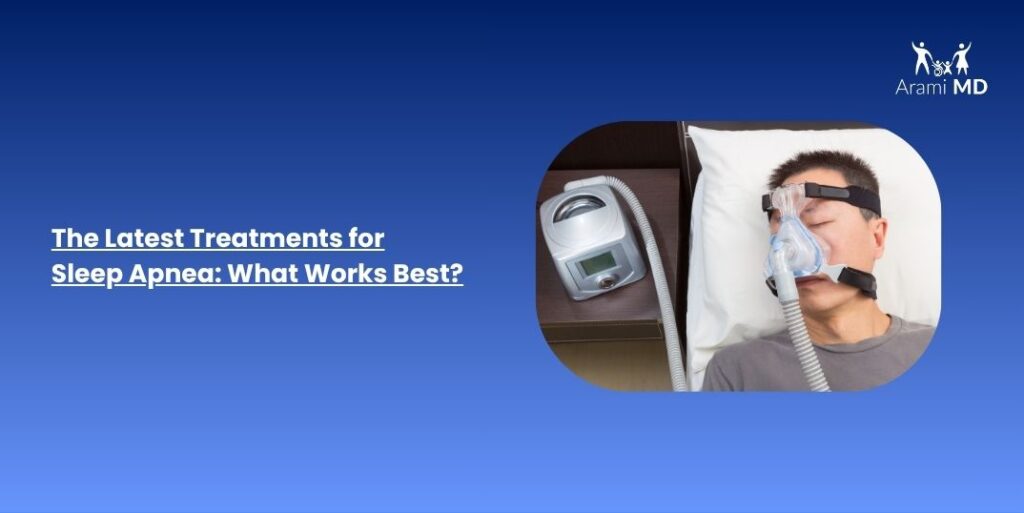
CPAP is one of the most common treatments for obstructive sleep apnea. CPAP stands for continuous positive airway pressure. It uses a small machine and a mask to send gentle air into the airway while the person sleeps. This air pressure helps keep the airway open.
CPAP can work very well, especially for moderate or severe sleep apnea. The main issue is comfort. Some people do not like wearing the mask at first. Children may need extra time, support, and a calm bedtime routine to adjust.
There are also other types of airway pressure devices. APAP changes the pressure through the night. BiPAP uses different pressure levels for breathing in and breathing out. A sleep doctor can decide which one is best.
For many children, enlarged tonsils and adenoids are a major reason the airway gets blocked during sleep. In these cases, doctors may recommend surgery to remove them. This surgery is called adenotonsillectomy.
For the right child, this can make a big difference. Snoring may improve, breathing may become easier, and sleep may become more restful.
Still, surgery is not a guaranteed fix for every child. Some children continue to have symptoms, especially if they have obesity, Down syndrome, severe sleep apnea, craniofacial differences, or other medical conditions. Follow-up is important if symptoms return or do not fully improve.
Oral appliances are small mouthpieces worn during sleep. They help keep the airway more open by moving the lower jaw or tongue into a better position.
These are used more often in adults with mild to moderate obstructive sleep apnea. They may also help people who cannot tolerate CPAP. In children, oral appliances need careful planning because the jaw and teeth are still growing.
This is not something to buy without medical advice. A trained dental or sleep professional should be involved, and the person should still have a proper sleep apnea diagnosis.
Weight can make sleep apnea worse in some people because extra tissue around the airway can make breathing more difficult during sleep. When weight is part of the problem, healthy weight loss may reduce symptoms.
One newer update is medication for certain adults. In 2024, the FDA approved tirzepatide for adults with obesity and moderate-to-severe obstructive sleep apnea. It is used along with diet and physical activity.
This does not mean medication is now the answer for everyone. It is not a general cure for sleep apnea. It is also not a standard treatment for children. It may help selected adults when weight is a major factor, but a doctor still needs to guide care.
Lifestyle changes can help, but they usually work best when they are part of a larger plan.
Helpful steps may include keeping a steady sleep schedule, treating allergies or nasal congestion, sleeping on the side when advised, reducing screen time before bed, and avoiding sedating medicines unless a doctor says they are safe.
For children, healthy sleep habits are especially important. A tired child may not always say, “I am sleepy.” Instead, they may act restless, upset, or unable to focus.
Some adults who cannot use CPAP may be candidates for hypoglossal nerve stimulation. This is an implanted device that helps move the tongue forward during sleep so the airway stays more open.
This is not a first choice for most people. It is used only in selected cases after testing and specialist review. Some teens with Down syndrome may also be considered if they meet strict medical criteria.
The best treatment starts with understanding the cause. A doctor may look at sleep symptoms, tonsil size, nasal blockage, weight, growth, behavior, school concerns, and medical history. A sleep study may be needed to confirm the diagnosis and measure how serious it is.
For children, this step is very important because poor sleep can look like ADHD, anxiety, mood changes, or learning trouble. Treating only the daytime behavior may miss the real problem if sleep apnea is involved.
The latest sleep apnea treatment options give families more choices than before. CPAP, surgery, oral appliances, weight management, newer medications for selected adults, and device-based treatments can all help when used for the right person.
If your child snores often, breathes through the mouth at night, wakes up tired, or struggles with attention and mood, sleep may be part of the problem.
At Arami MD, the focus is on helping families understand these signs and take the next step toward the right evaluation and support. The right care can help your child sleep better, feel better, and function better each day.
For pediatric developmental and behavioral care guidance, visit Arami MD.
It depends on the cause. CPAP is often very effective for moderate-to-severe sleep apnea. For children with enlarged tonsils and adenoids, surgery may be the best first step.
Mild symptoms may improve in some cases, but sleep apnea should not be ignored. If breathing is stopping during sleep, a medical evaluation is important.
No. Some people snore without sleep apnea. But loud snoring with gasping, pauses in breathing, restless sleep, or daytime behavior changes should be checked.
Yes. Children are more likely to need evaluation for tonsils, adenoids, allergies, growth, and behavior changes. Adults may more often use CPAP, oral appliances, weight management, medication in selected cases, or device-based treatment.